
Why your website is quietly going out of date
Read more
As teams grow, channels multiply, and work speeds up, identity stops being something people refer to occasionally and starts becoming something they rely on every day. It moves from expression to infrastructure.

That shift is easy to miss. But when it happens, the difference between an identity that looks good and one that actually works becomes very clear.
Identity problems rarely announce themselves as brand problems. More often, they show up as friction.
Designers interpret things slightly differently. Content teams hesitate before publishing. Developers make visual decisions by default. Materials start to drift, not because anyone wants them to, but because the rules are implied rather than clear.
At first, these are small inconsistencies; over time, they add up.
The identity still exists, but it no longer helps people make decisions. Instead of speeding things up, it slows them down.
This is usually the moment when organisations start talking about a refresh. Not because the identity is wrong, but because it is no longer doing enough work behind the scenes.
The strongest identities behave less like guidelines and more like systems.
They are designed to be used, not admired. They provide clear principles that travel across channels, teams and disciplines. They remove debate by making intent visible.
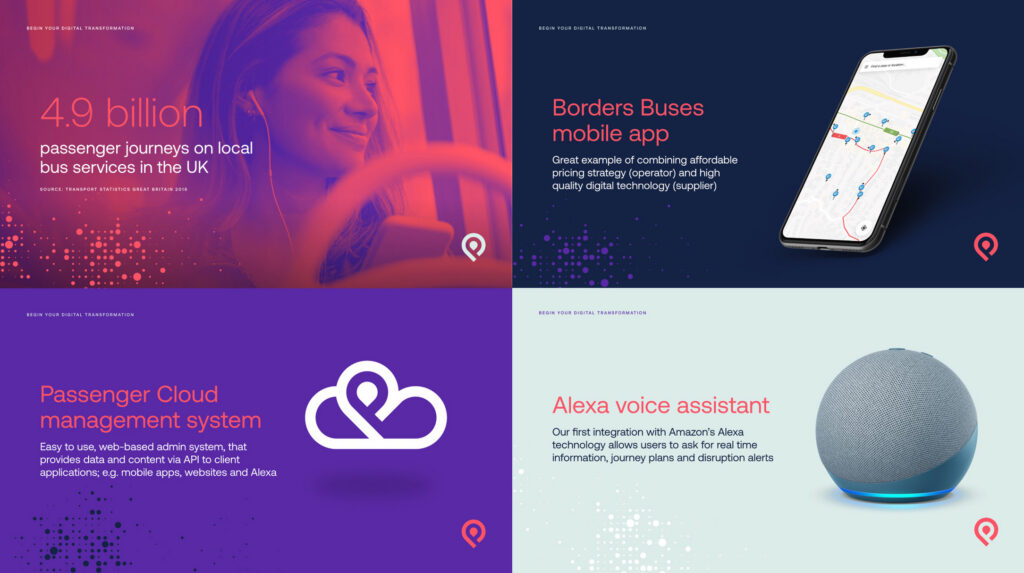
We’ve seen this most clearly in work like Passenger, where the identity had to scale across content, community and campaigns without fragmenting. The success of that work wasn’t down to a single visual idea, but to the clarity of the system underpinning it. Clear rules created freedom. Consistency came from structure, not control.
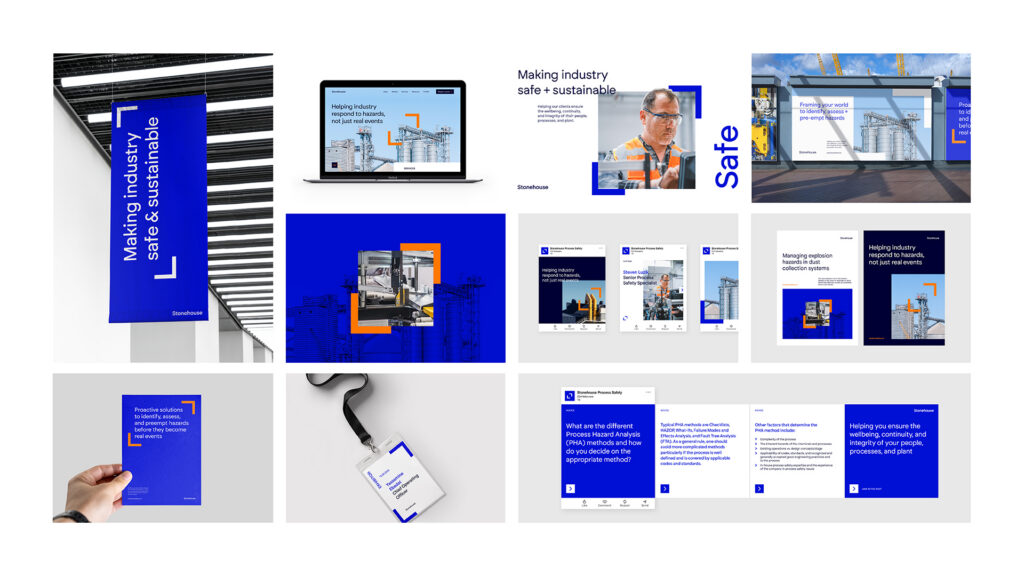
In a very different context, Stonehouse Process Safety faced a similar challenge. Communicating complex, technical information requires precision and trust. Here, identity wasn’t about personality. It was about clarity. The system needed to support comprehension across digital platforms and specialist audiences. Again, it was the infrastructure of the identity, not its surface, that made the difference.
When identity functions as infrastructure, something subtle changes in how organisations work.
Teams move faster because they don’t need to second-guess decisions. New materials feel easier to create. Digital platforms stay coherent as they evolve. The brand becomes easier to maintain, not harder.
Importantly, this isn’t about everything looking the same.
Good identity systems allow for variation, but within clear boundaries. They support judgment rather than replacing it. Over time, that balance creates confidence.
When identity is reduced to the surface, those benefits disappear quietly. Work slows and debate increases. And the brand becomes harder to hold together the more it is used.
Many organisations are producing more than ever. More content, more touchpoints, more moments where the brand shows up without direct oversight.
In that environment, identity can no longer rely on memory or goodwill. It has to do practical work.
This is why identity projects that focus only on how things look often struggle to deliver long-term value. They solve for recognition, but not for use.
Identity that lasts is built with the day-to-day reality of the organisation in mind. How decisions get made. Who needs to use it? Where it needs to flex. What it needs to hold steady.
That kind of thinking is less visible at launch. But it shows up everywhere else.
Identity doesn’t create value by existing, but by being used.
When it works as infrastructure, it can reduce friction, support momentum and help organisations stay coherent as they grow.
If you’re unsure whether your identity is supporting day-to-day work or quietly getting in the way, do get in touch. A short conversation can help bring a bit of clarity.