Why successful website projects start with listening (not designing)
Read more
We’ve started running an exercise we call “Five in Fifteen”. It’s a staggeringly simple idea: you just ask five carefully chosen questions, with fifteen minutes to answer them. No preparation, no polishing, just a little instinct and honesty.

Originally, we used Five in Fifteen with our clients. It’s a way of stepping outside of delivery and hearing, in plain language, what actually mattered, what changed, what felt different. Not as a survey or a scorecard but as a conversation.
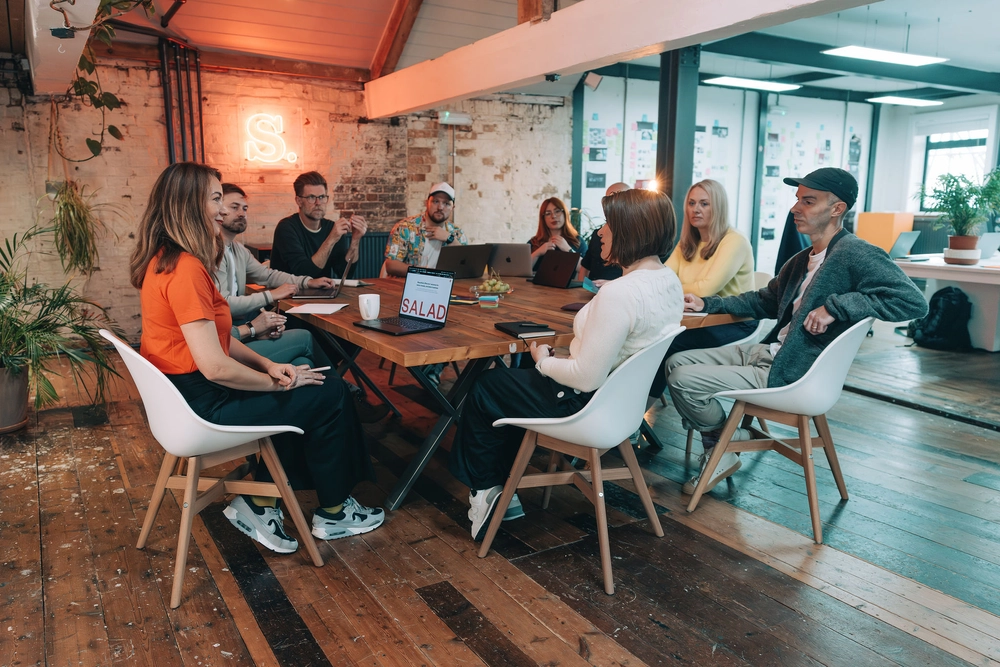
At the end of 2025, we turned the questions on ourselves. We asked five questions of our team, adapted from the original to focus on learning, pride, energy, friction and stretch. What came back was thoughtful, human and surprisingly consistent.
What surprised us most was how closely they echoed what clients tell us.
Clients talk about ease, about trust and about feeling like things were under control. They talk about confidence, clarity and momentum often more than they talk about deliverables.
Internally, the team talk about ownership, judgment, protecting time, asking better questions and seeing work through properly.
“Being trusted to crack on with a project, owning it rather than overseeing it, that’s when I feel most engaged.”
“Taking on more responsibility has changed how I work. It’s pushed me to think beyond my own tasks.”
“Seeing a project from the start through to delivery completely changes how you approach decisions.”
Ease on the outside exists because ownership is taken seriously on the inside. That connection is easy to overlook when we’re busy delivering, but it comes through strongly in both sets of responses.
When we asked what people had learned this year, the answers were rarely about new skills. They were about mindset shifts:
“Fail fast. It’s more effective to do something quickly and improve it than to wait until it’s perfect.”
“I’ve learned to protect my time better and ask why more often.”
“Understanding the full process makes scoping and decision-making so much stronger.”
AI came up frequently, but not as a silver bullet:
“Using AI as a starting point, not an answer. It helps iterate fast without losing judgment.”
“It’s powerful early on, but knowing where it comes up short is just as important.”
When we asked what our team were most proud of, they typically didn’t point to the biggest projects. They talked about moments they felt stretched, trusted or useful:
“That moment when you realise something you worked on will be used for years.”
“Leading something I hadn’t done before and seeing it land.”
“Delivering something complex without over-engineering it.”
“Supporting someone else’s growth and seeing them step up.”
There’s a quiet confidence in these answers, a pride rooted in responsibility, not recognition. Clients feel the impact of that kind of pride long after a project ends.
Energy shows up in very consistent places.
“Small teams, clear problems, real ownership.”
“Working closely across disciplines, solving things together.”
“Being involved early, not just handed something to execute.”
“Those moments where we come together to talk things through properly.”
And, being together in the room still matters too.
“More time together, in person, makes a real difference.”
Clients describe this energy differently. They talk about availability, warmth and trust. But it comes from the same place. People who feel safe to collaborate tend to create better experiences for everyone else.

The team were equally honest about what would make the biggest difference.
“Clearer written communication that you can come back to.”
“Sharing more context earlier, not staying in our lanes.”
“A clearer, shared direction when things get difficult.”
These aren’t complaints, they’re points we can leverage. Interestingly, clients ask for something similar, just from a slightly different perspective. More proactivity, more challenge, a nudge to go further. It’s an overlap that matters.
The final question asked what people wanted to try next year that felt uncomfortable. The answers were pretty revealing:
“Being more direct. Radical candour doesn’t come naturally to me.”
“Leading more, even when I’m not fully confident yet.”
“Spending more time thinking strategically, not just delivering.”
“Having harder conversations because they lead to better outcomes.”
Clients are asking for something similar, even if they use different language. More perspective, more challenge, more guidance, not just support.
Five in Fifteen reminds us of something simple. Better work starts with better questions. Not just at the start of a project, but throughout it. And not just with clients, but with each other and ourselves.
Fifteen minutes of honest reflection surfaced patterns that months of delivery can easily hide. So we’ll keep using this exercise, internally and externally, because it creates space to listen properly.
And listening, more than anything else, seems to be where the real value begins.