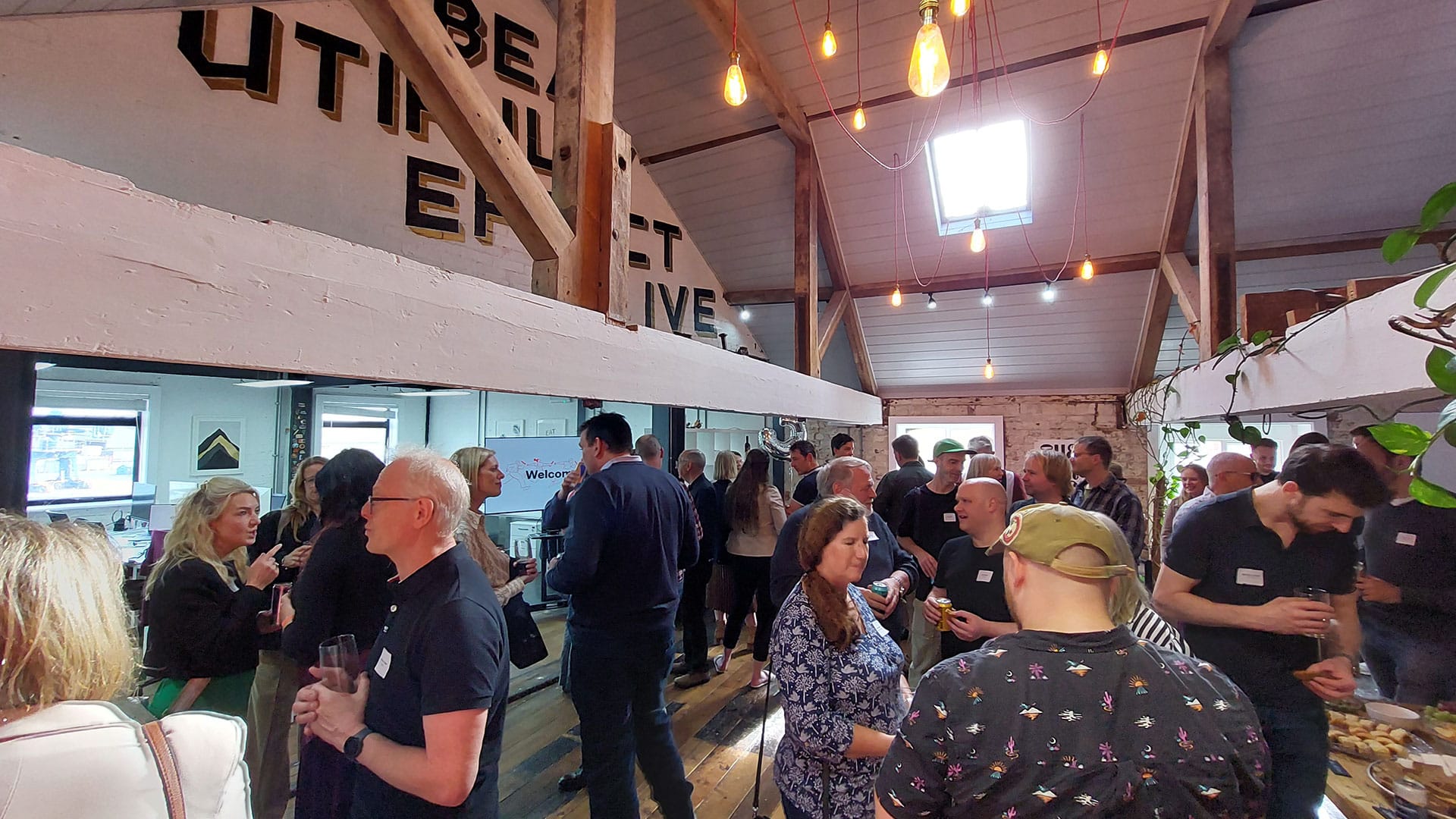
Five years employee-owned: reflections on our most significant anniversary yet
Read more
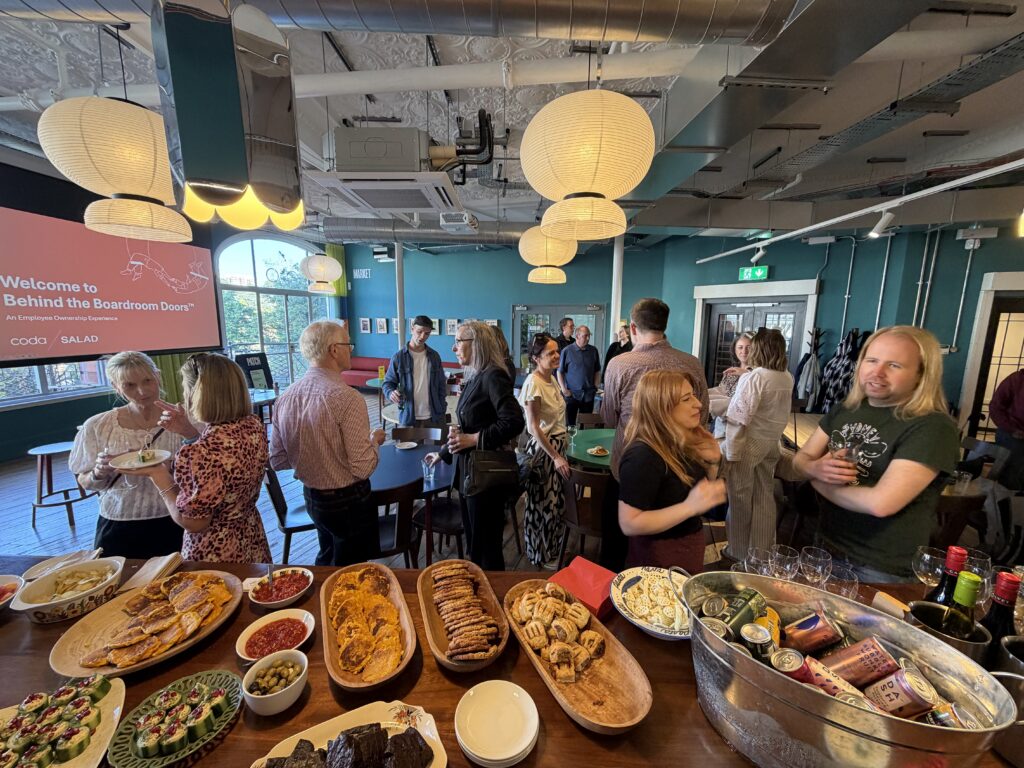
A reflection on our latest South Coast EO Networking Event, co-hosted with Coda
There’s a question that comes up again and again in employee-owned businesses: what actually happens in there?
The trust board. The room where decisions get made – about profit distributions, about governance, about the future of the business and the people in it. For many employee owners, it can feel like a mystery. And mysteries, left unfilled, tend to get filled in with assumptions that aren’t always helpful.
That’s exactly what we set out to address at our latest South Coast EO Networking Event, co-hosted with our brilliant friends at Coda. And thanks to the generosity of one extraordinary facilitator, we think we pulled it off.
We’ve been running South Coast EO Networking Events since 2022. The idea was simple from the start: bring together people from employee-owned businesses to share stories, ask questions, and spend time with others who genuinely understand the model. No sales pitches. No corporate agendas. Just honest conversation, good food, and the kind of warmth you tend to find in EO communities.
For the last couple of events, we’ve co-hosted, and partnering with Coda felt like a natural fit. They’re two years into their EO journey, they share our values, and frankly, they’re just a lovely bunch of people to work with. Sharing the load also means sharing the fun, and that’s been a real joy.
At our January event, Jen Swain (Coda’s CEO) suggested bringing a session she’d seen at the EOA Annual Conference to our next gathering. The session was called Behind the Boardroom Doors, and it had left a real impression on people who’d attended.
Our Delivery and Operations Director, Nicole, had been at the conference version and came back buzzing. Coda had also run their own version previously, and by all accounts, it went down brilliantly. So we said yes before we’d even finished the conversation.
The session is the creation of Jane Mitchell FRSA – NED, independent trustee, author, and one of those rare people who can hold a room through sheer warmth, clarity and expertise. We thought we’d reach out and ask if she’d be happy for us to use her format. Then – slightly nervously – we wondered aloud whether there was any chance she might come to Bournemouth to facilitate it herself.
She said yes. We were genuinely honoured.
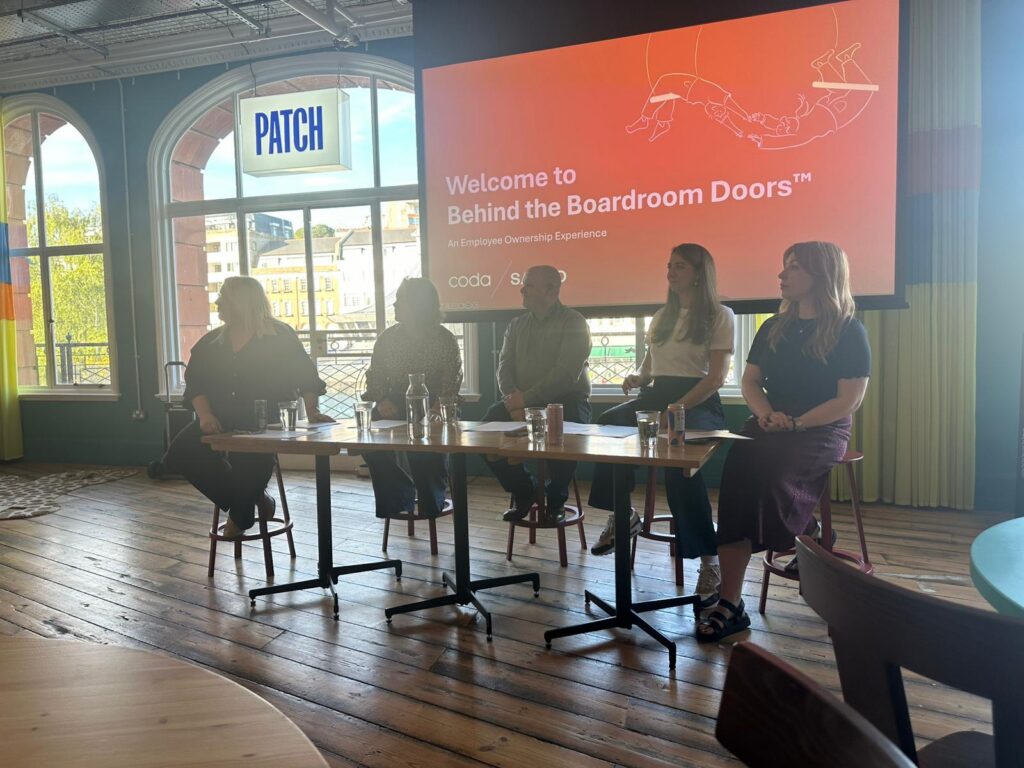
Behind the Boardroom Doors is a scripted role-play session, but that description doesn’t quite do it justice.
A fictional trust board sits together and works through two real-world scenarios – the kind of agenda items that land on actual trust boards in actual EO businesses. For our evening, those were:
The board for the evening was made up of people who, between them, know EO from the inside: Jayne Witheyman as chair, Andy Brown as independent trustee, Jen Swain as visiting CEO, and me (Bella) as the fictional founder. Nicole stepped into the employee trustee seat – a role she knows well, having served as our employee trustee for four years.
Jane Mitchell facilitated and narrated throughout, drawing out perspectives, posing questions to the board and the audience, and holding the whole thing together with what I can only describe as masterful ease.
But the element that makes this format truly special – the thing Jane has built into the DNA of the session – is the inner voice.
Before each board member speaks in the room, they share what they’re actually thinking. Their instincts. Their conflicting loyalties. The things they’re holding back. And then they say what they say as a trustee.
The gap between those two things is where everything gets interesting.
Watching it happen – even being part of it – you realise how much any trustee or board member brings to the table that never makes it into the official conversation. Their history with the company. Their relationship to risk. Their identity, whether that’s as an employee, a founder, or an independent voice. The awareness that they have a responsibility to hold, even when every human instinct is pulling them somewhere else.
It builds empathy in a way that no amount of explaining governance on a slide ever could.
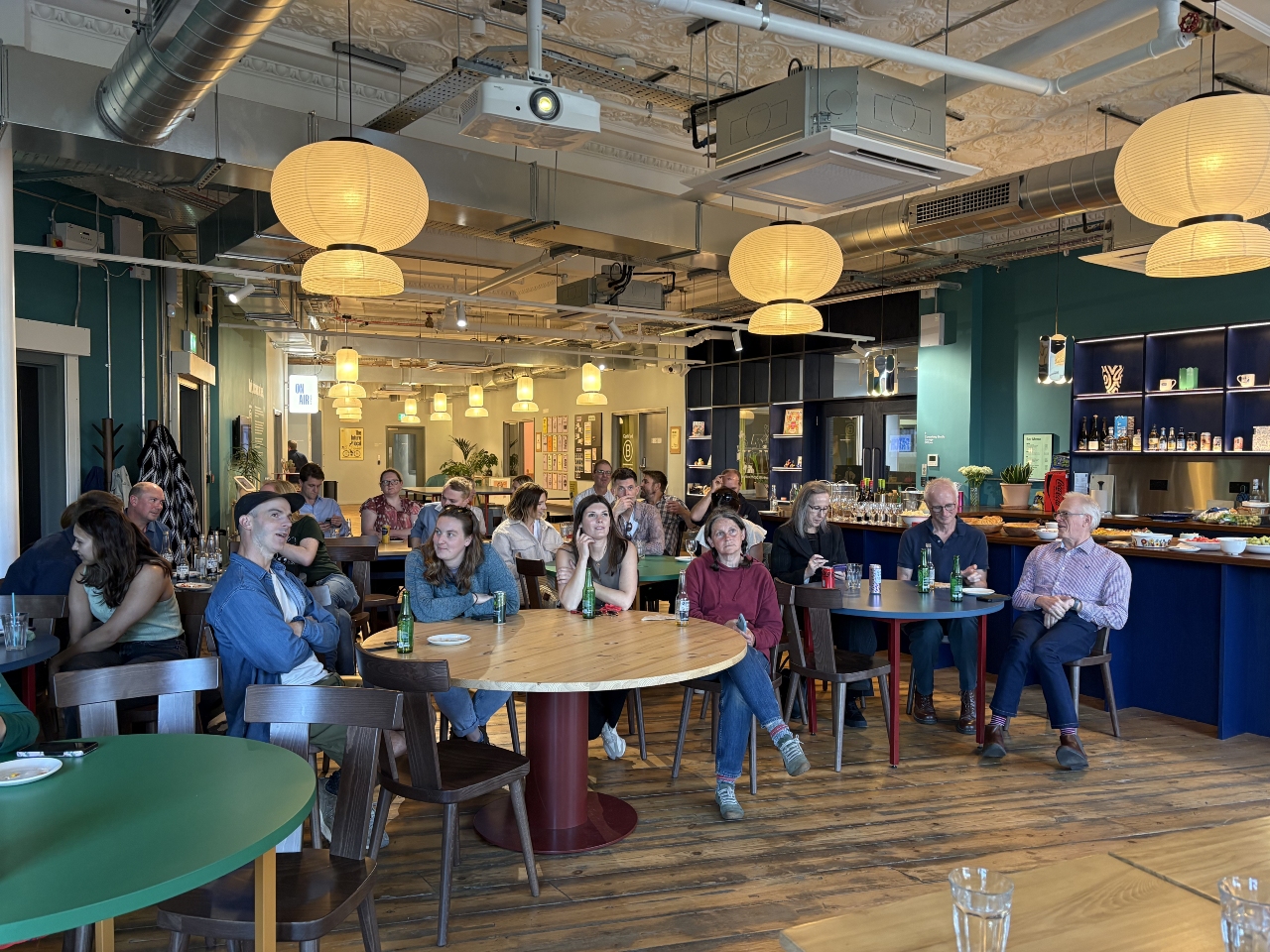
After the two scenarios, we opened up to the audience, and the conversation was rich. People had voted live on what they would have decided (using Slido, which added a nice element of suspense as the results came in), and the room was genuinely split on both.
When we asked people to share their key takeaway from the evening, two themes came through clearly.
Compromise. Every seat on a trust board comes with compromise built in. You arrive with a perspective, and you leave having held it up against everyone else’s. In an EO business – where the structure itself exists to balance interests – that compromise can feel especially weighty. But several people noted that naming it, seeing it played out, made it feel less like a failure and more like the work itself.
Risk appetite. The strategic investment scenario sparked a genuinely fascinating debate. There’s a real tension between the entrepreneurial clarity that a founder or strong leader can bring – the ability to back a bold vision and move fast – and the broader responsibility that employee ownership creates. You’re not just risking your own capital or your own future. The nature of EO means there’s more reason to share, to consult, to consider. That’s not a weakness, but it does change the conversation, and it’s worth talking about openly.
Events like this don’t happen without people who throw themselves into them, and I want to say a proper thank you.
Jane Mitchell – for creating this format, for travelling to be with us, and for facilitating with such skill and generosity. It was an honour.
Nicole Cook, Jayne Witheyman, Andy Brown and Jen Swain – for committing to the script, for bringing such authenticity to your roles, and for making the fictional board feel very real indeed.
Coda – for being the best co-hosts we could ask for. Jen and Jayne, your energy, your ideas and your organisational muscle made this so much better than it would have been without you. We’re lucky to be doing this together.
Kara’s Vegan Supper Club – for the food, which, as always, was a genuine highlight of the evening.
And most of all, everyone who came. Especially those who travelled a long way, who brought new faces along, and who shared so openly in the room. These events only work because of the community, and what a community it is.
I’ve been to a lot of networking events over the years. The best ones leave you with something you didn’t have before – a new way of seeing something, a question worth sitting with, a connection that matters.
This was one of those evenings.
If you lead an EO business, I’d encourage you to think about how your team – not just your leadership – understands what happens inside your trust. Not because they need to know every detail, but because empathy for the people making those decisions is part of what makes employee ownership mean something.
And if you ever get the chance to experience Behind the Boardroom Doors – take it.
Salad has been running South Coast EO Networking Events since 2022. They are free to attend and open to people from employee-owned businesses or those curious about the model. Keep an eye out for our next event