Navigation is diagnosis, not decoration
Read more
Every website starts life as an answer to a brief. So does every identity, every brochure, every deck. Someone described what the business needed; a team built the thing that met that brief. Whilst whatever was built fitted the brief on launch day, the problem is what happens next. That brief holds for a while, but then gaps open up between what was built and what is needed as the weeks, months, and years roll by.
We’ve made the case before that digital work should be built to last, not just to launch. But building it well is only half the job. The rest is keeping it in step with a business that never stops moving, long after launch.
Typically, a brief captures a business at a specific moment. This is who we are, this is what we sell, this is who we’re talking to. And whilst a brief may contain history, trends, and things that have been tried before, typically it can only be speculative about the future. It was accurate the day it was written, but for any number of reasons it can start to drift. A competitor moves, the audience changes, the economy turns, a regulation lands, or the business adds a service it didn’t have before.
None of that was in the brief, because none of it had happened yet. So the work carries on doing the job it was designed for, which is now a slightly different job from the one the business actually has. This isn’t always a gap that opens up quickly or quietly, but it can be missed with a project-by-project mindset. Our experience of dealing with our own site is that just as one thing is completed, there is a queue of others waiting their turn.
Clients do ask for flexibility. “Can we add pages, can we change the copy, can we swap the images ourselves?” It’s one of the first questions in the room, and it’s a fair one. But that’s flexibility within the shape of the brief. Room to move the furniture, not to change the building. What people rarely ask for is work that keeps evolving, because that feels like an open-ended cost, or a dependency with no obvious end. It feels like handing over control rather than holding onto it. So “done” wins. Sign it off, own it, move on.
The trouble is that “what we need it to do” describes a moment, not a decade. The website gets built for the business as it is on launch day, then is asked to serve the business as it becomes. Nobody decides this. It happens one small change at a time, until the gap is wide enough to feel.
You can see it clearly once you know what to look for.
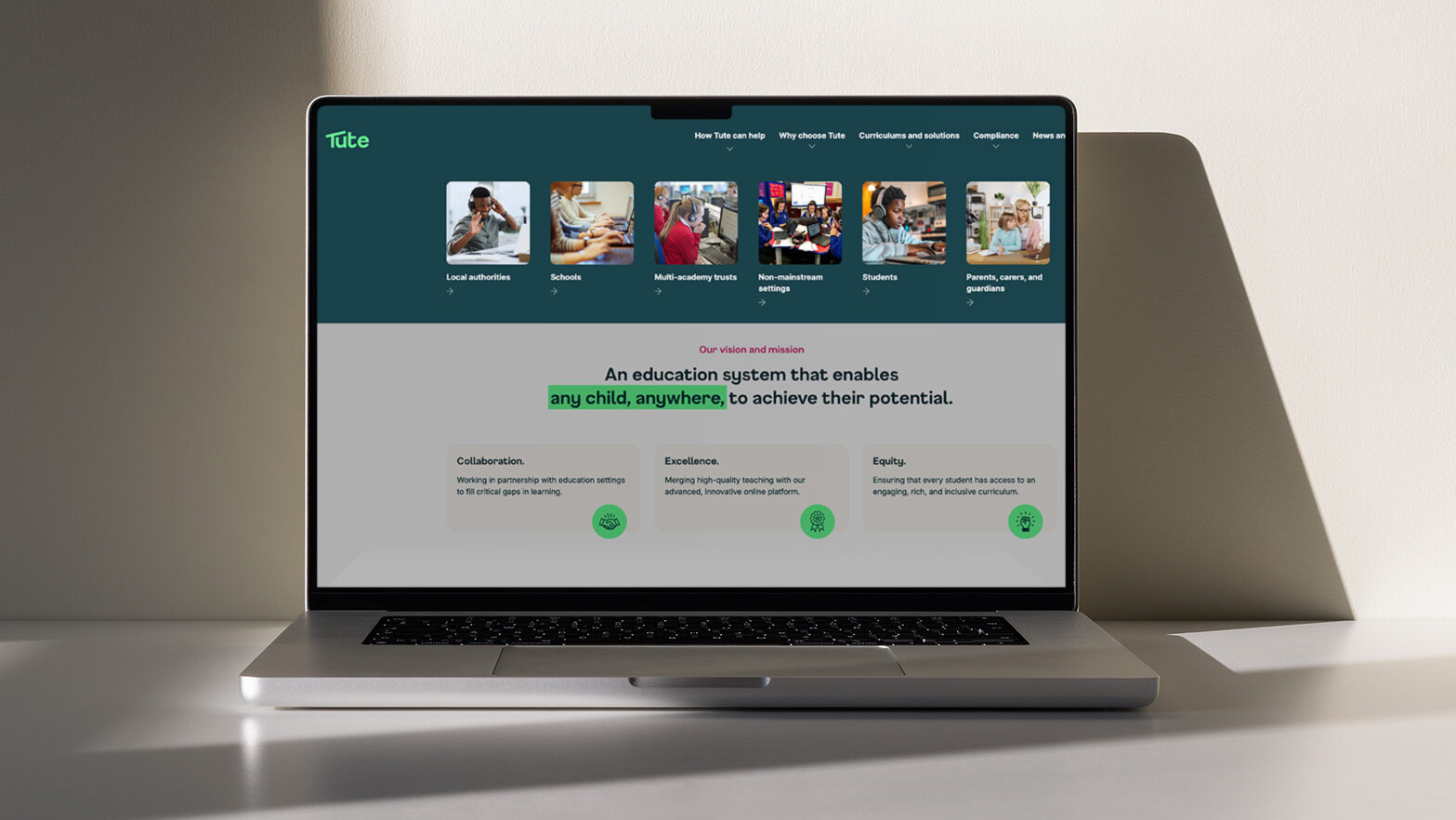
Tute is a perfect example of a website needing a reframe. The site was built well for the audience Tute had. Then the business got sharper about who it was really for and narrowed its focus, which is a sign of maturing, not of trouble. But a site built around a broad audience doesn’t automatically serve a specific one. Same pages, same structure, now doing a job they were never briefed for. Nothing failed. The business moved, and the site carried on describing the old one.
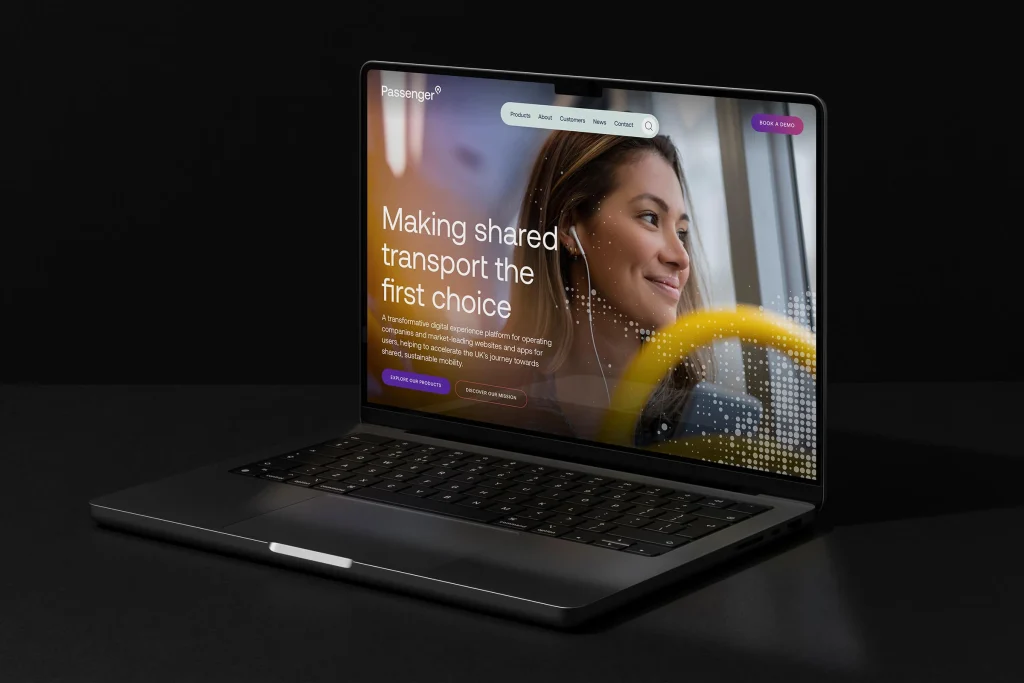
Passenger shows the same thing driven from outside. They set out building against one set of needs, and then something significant arrived and rewrote them. No brief could have planned for it. The ground moved, and the thing standing on it had to move too. This is the version nobody can be blamed for, and everybody recognises… the world changes the question after you’ve answered it.
And it isn’t only websites. When Enginuity’s remit as a skills organisation changed, the brand it had been using was describing a narrower job than the one it now did. The work that followed wasn’t a refresh for its own sake. It was a business that had grown into a new shape and needed to sound like it. An identity, like a site, speaks for the company that briefed it, not the company it becomes.
A project ends, but a product lives. It keeps answering to the people using it and the business behind it, and it keeps earning its place. The same is true of a brand, a brochure, a deck. Anything built to speak for a business has to keep pace with what it needs to say.
You can build a thing well, build it to flex, and it will still drift, because no structure updates itself. Something has to move it as the business moves. A finished project feels safe. It’s signed off, it’s yours, it’s done. But your business keeps moving after launch, and the site sits still. So month by month, it fits you a little less.
The alternative is to keep at it. To treat the site as something you look after, not something you finish and hand over. That sounds like extra cost, an ongoing job nobody asked for. But it’s what keeps the site working for the business you are now, not the one you were the day it launched.
We know this because we live it. We put real time and money into our own website, and it still falls out of date because the business keeps changing faster than any one build can keep up with. And handing a client a site they can edit doesn’t fix it. You can change the words and swap a picture, but a new section, a new page type, a form that works differently, all of that still takes design and build. Being able to edit a site isn’t the same as it keeping itself up to date.
None of this is fixed by a better brief or a bigger relaunch. It’s a change of mindset. A website, a brand, a brochure, none of them are things you finish and file. They’re tools the business runs on, and the business never stands still. Almost no owner or marketer would say they could do without their site, even a tired one. So the real question isn’t whether it’s done. It’s whether you’re still looking after it. Keep at it, and it keeps pace with you.
If you’ve read this and recognised your own website, or your brand, or that brochure you haven’t looked at in two years, it might be time to take stock. Our brand assessment is a quick way to see how well what you’ve built still fits the business you’ve become, and if it turns out something’s drifted, we’re always happy to talk about what to do next.